
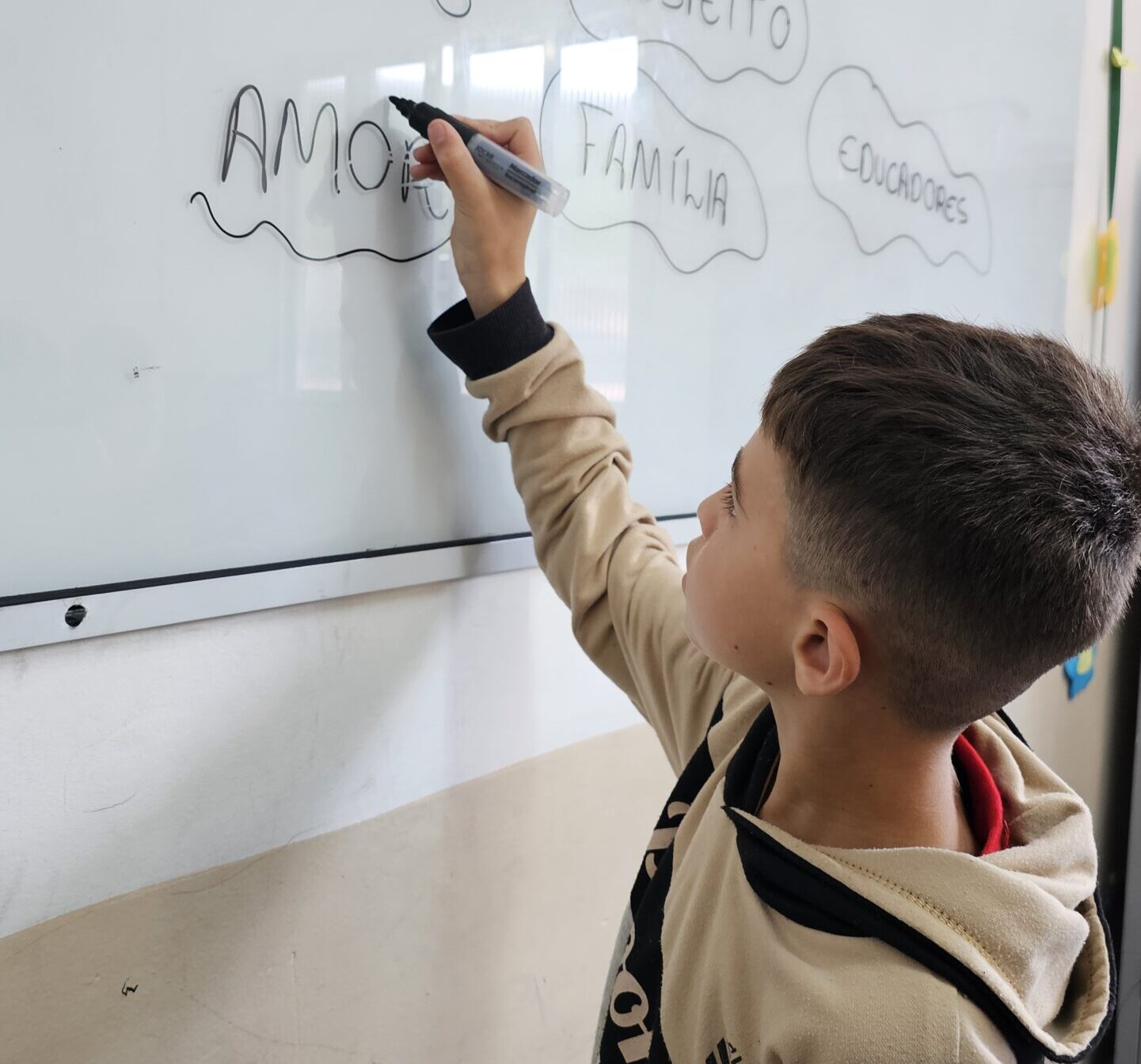
Davi Pimenta is nine years old and lives in a context where economic hardship has shaped many aspects of daily life. His family depends largely on informal work, and periods of financial instability have at times affected access to regular meals, predictable routines, and consistent childcare. For children, these conditions can create barriers to healthy emotional, social, and physical development.
Davi’s mother is attentive and deeply committed to his wellbeing. She works in the agricultural sector to support the household, often in demanding conditions that may involve exposure to agrochemicals and long working hours. Without safe alternatives for childcare, Davi frequently accompanied her to work sites.
Although remaining close to his mother was important, these environments were not designed for children. They offered limited opportunities for play, learning, rest, or social interaction. Over time, the absence of structured routines and secure spaces contributed to behavioral difficulties. Davi showed signs of emotional insecurity and often reacted to conflict with impulsive physical responses.
In early 2024, Davi returned to Humedica Brasil through the Service for Coexistence and Strengthening of Bonds (SCFV). The program offered what many vulnerable children need most: a safe, welcoming, and predictable environment where they could be protected while building confidence and social skills.
At the center, Davi began participating in daily activities guided by trained educators and technical staff. Beyond supervision, the support was holistic. Recognizing the importance of nutrition in child development, a volunteer nutritionist helped establish an individualized food plan to support his growth, concentration, and overall health.
The team also monitored his emotional and behavioral progress closely. During workshops such as capoeira, educators initially observed aggressive play patterns and difficulty regulating reactions. However, rather than responding with punishment, staff used trauma-informed approaches grounded in empathy, consistency, and positive guidance.
Humedica Brasil also played an important coordinating role with the broader public service network. With family guidance and referrals, Davi gained access to specialized psychiatric and psychological support through local services, including CAPSi. This integrated approach ensured that educational, social, and health needs were addressed together.
One meaningful moment reflected how far Davi had progressed. After discovering a small lizard inside a toy box, he did not respond impulsively or aggressively, as might once have happened. Instead, he expressed concern and wanted to protect the animal. It was a simple interaction, but it revealed growing empathy, emotional regulation, and a sense of inner security.
Today, Davi increasingly understands that he can rely on trusted adults when difficulties arise. Rather than using physical defense, he now seeks educators for support, explains what happened, and asks for help.
Davi’s journey demonstrates the value of coordinated child protection services that combine safe spaces, qualified care, nutrition, and access to health networks. Through sustained support, Humedica Brasil is helping children like Davi build stronger foundations for learning, wellbeing, and full social inclusion.